
Recipes
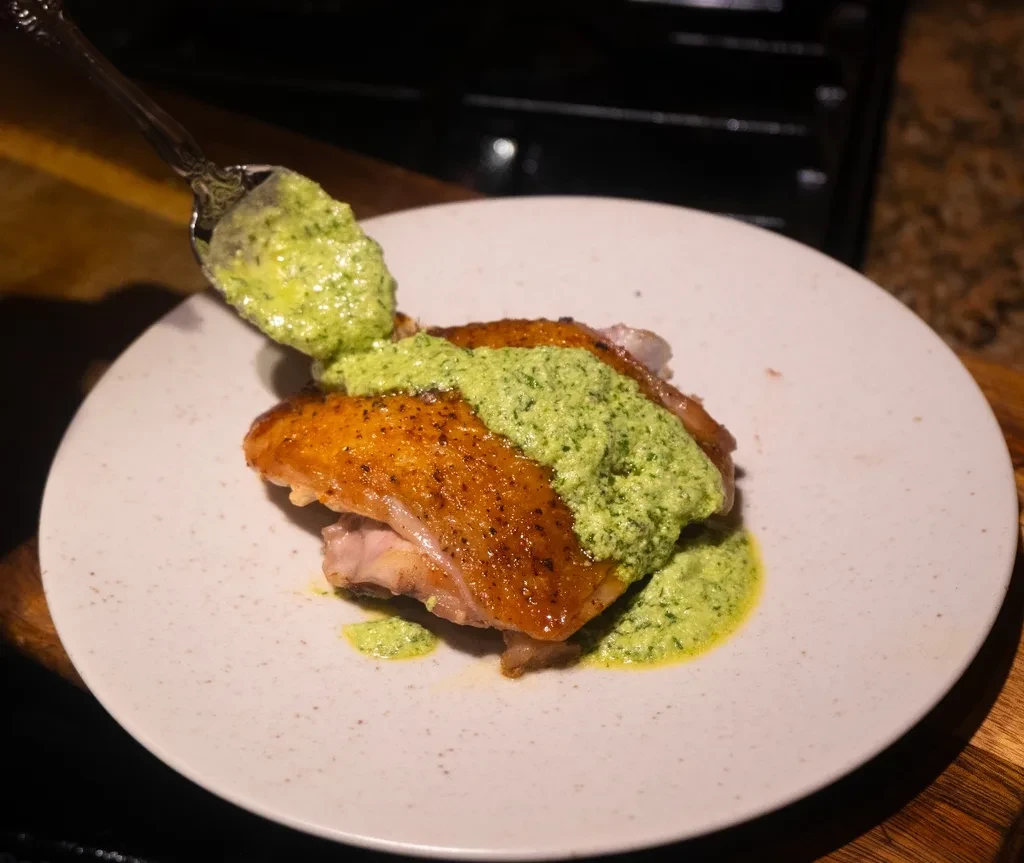
Many folks shy away from chicken with the skin on and bone in because they’re just not used to cooking it that way. We’ve got a chef’s foolproof method for cooking flavorful skin-on, bone-in thighs. Skin gets crispy, meat stays juicy, and you’ve got a base to do whatever you like with. Pair it with this easy garlic and herb feta sauce, thrown in a blender while the chicken cooks, or eat it on its own. Quality meat and good technique speak for themselves here.
Read more...

What’s the difference between stock and bone broth? 48 hours of slow cooking, extracting collagen, gelatin, fat and protein from beef marrow bones and pasture-raised chicken paws. Keeps your skin bouncy and youthful, joints strong, and gut healthy.
All you need is a slow cooker and a little bit of patience.
Read more...

Gizzards are lean, high-protein muscle that reward a low, slow cook. Braised until tender, they turn rich and hearty. From pasture-raised birds, they're honest, traceable protein. They're also an excellent addition to a dog's diet.
Read more...

Brisket comes from the chest, one of the hardest-working muscles on the animal, packed with connective tissue and fat, which is exactly why it takes so long. Low and slow breaks all of that down into tender, rich, deeply flavorful meat. Rush it, and it's tough. Patience is the recipe.
Read more...

Pasture-raised ground turkey is leaner than beef but still full of flavor. A spiced chili is the perfect showcase. Keep the heat medium so it doesn't dry out, then let it simmer into something thick and hearty. A weeknight staple that reheats beautifully.
Read more...

Our Ancestral Blend is 85% ground beef and 15% organ meat, so a long, spiced simmer is the perfect place for it. The chili powder and tomato completely mask any organ flavor while you get all the nutrition. Regular ground beef works just as well. It's thick, hearty, and better the next day.
Read more...

Pasture-raised wings have a better skin-to-meat ratio and real flavor because the birds actually moved around outside. The secret to shatter-crisp skin without a fryer is a light coat of baking powder and thoroughly dry skin. Sauce them after cooking, never before.
Read more...

Chuck roast comes from the shoulder, loaded with connective tissue, and that's exactly what you want. Cooked low and slow, that collagen melts into gelatin, so the meat falls apart, and the sauce turns silky. Sear it first, then let the oven do the rest all afternoon.
Read more...

Shoulder roast sits near the chuck and carries good connective tissue, ideal for low-and-slow cooking that breaks down into tender, shreddable beef. Its bold flavor holds up to strong seasonings like chipotle and garlic. Braise it, shred it, pile it into tacos.
Read more...

Pasture-raised chicken breasts are leaner than conventional, so the sear-then-roast method keeps them juicy: a hot skillet crisps the skin, then a gentle oven finish cooks the meat through without drying it out. A bright lemon-oregano butter does double duty. Seasoning the pan as it roasts and saucing the chicken at the end. The real secret is pulling it at 162–163°F and letting carryover heat carry it to a perfect 165°F. Simple ingredients, restaurant results.
Read more...

Chicken feet are almost entirely skin and connective tissue, which means almost pure collagen. Simmered long enough, they make a deeply gelatinous stock that sets like jelly when cold. A quick blanch first cleans them up. One of the best broth boosters there is.
Read more...

Oxtail is bony, fatty, and loaded with collagen. That collagen is the whole point. Cooked long enough, it breaks down into a silky, naturally thickened broth and fall-off-the-bone meat that no other cut can match. It just needs time, so don't rush it.
Read more...
Common Sense Farming.

2 COOTS RANCH
14736 Mount Carmel Road, Decaturville, TN 38329
(731) 207-0595
Copyright © 2026 2 Coots Ranch • Payments secured by Stripe
